
Glaucoma
Glaucoma: understanding your tests to protect your sight
Glaucoma slowly damages the optic nerve and at first causes no symptoms. That is why its tests, OCT and visual fields, matter so much: they are how we know whether it is under control.
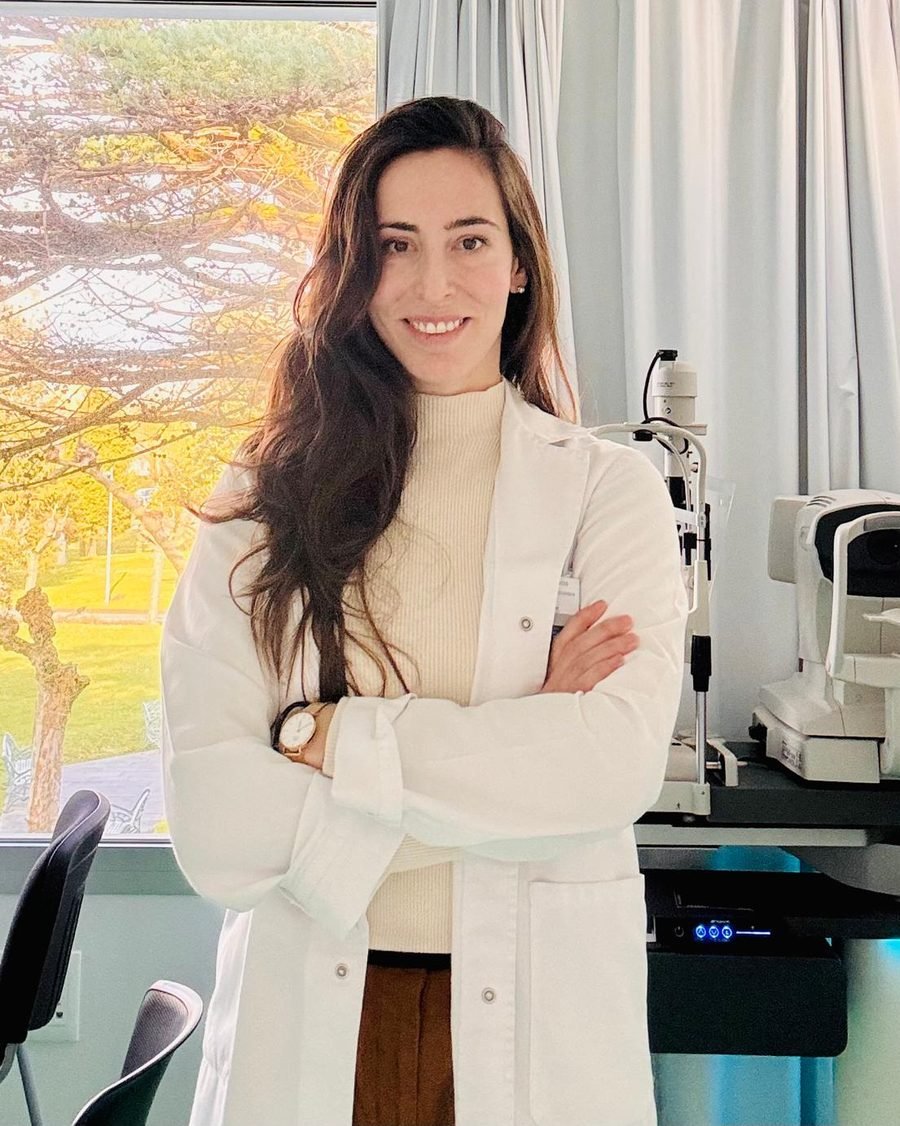 By Dr Idaira Sánchez Santos, ophthalmologist · Nº 390905425
Last reviewed: · Patient information. It does not replace a medical consultation.
What glaucoma is
It is a group of diseases that damage the optic nerve, the cable that carries the image to the brain. The main risk factor we can treat is eye pressure, although some glaucomas occur with normal pressure. Damage affects side vision first and cannot be reversed, so the aim is to detect it early and slow it down.
The most common form, open-angle glaucoma, is painless and unnoticed until advanced. Acute angle-closure glaucoma, by contrast, causes severe pain, a red eye, blurred vision with halos and sometimes nausea: it is an emergency.
The tests: what they look at
- Eye pressure and pachymetry (corneal thickness, which affects the reading).
- Optic nerve OCT: measures the nerve fibre layer and ganglion cells. Comparing several OCTs shows whether there is loss.
- Visual field test: a map of your field of vision. Several are needed to tell a real change from test variability.
- Gonioscopy: examines the drainage angle of the eye.
Treatment
- Eye drops that lower pressure (prostaglandins, beta-blockers, carbonic anhydrase inhibitors, alpha-agonists…).
- SLT laser, which in many patients reduces or avoids the need for drops.
- Surgery (trabeculectomy, minimally invasive surgery or drainage implants) when the above is not enough.
Using your drops every day is the foundation of treatment. If they disagree with you, there are alternatives: talk about it rather than stopping them.
When an online consultation helps
- You have been told you are a "glaucoma suspect" and want to know what it means.
- You want a second opinion on whether your glaucoma is progressing, based on your OCTs and visual fields.
- Your drops cause side effects or you find it hard to keep up the treatment.
- You have been offered laser or surgery and want to understand the options.
Which tests to send the doctor
- Visual fields (all you have, with dates)
- Optic nerve and ganglion cell OCT
- Recorded eye pressures and pachymetry
- List of drops you use and since when
Severe eye pain with a red eye, blurred vision, coloured halos around lights and nausea may be an acute glaucoma attack. Go to an emergency department immediately.
Frequently asked questions
Can glaucoma be cured?
Damage already done cannot be recovered, but in the vast majority of patients treatment slows the disease and preserves useful vision for life.
If my pressure is normal, can I still have glaucoma?
Yes: normal-tension glaucoma exists. That is why diagnosis is based on the optic nerve and visual field, not just pressure.
How often should tests be repeated?
It depends on your risk and stage. At first they are usually repeated more often to establish whether there is progression.